Okay, so this is the tough bit to swallow. I can’t make a living from just nature writing alone. &, as I understand it, most prolific and high profile nature writers have at least one other source of income.
When I started out, a successful and award-winning nature writer advised me to take of a portfolio approach to being a nature writer. I could have worked on something completely unrelated, but I decided to draw on my background in teaching to teach nature writing, and my background in ecology to build my skills and knowledge as a naturalist, with the aim of leading nature walks and teaching workshops.
At the start, I couldn’t have survived without some savings and an Arts Council grant.
Teaching nature writing – both privately and as a university associate lecturer – has improved my own writing and knowledge of nature writing. I’m fairly sure I’ve learnt at least as much from the students as they’ve learnt from me, if not more.
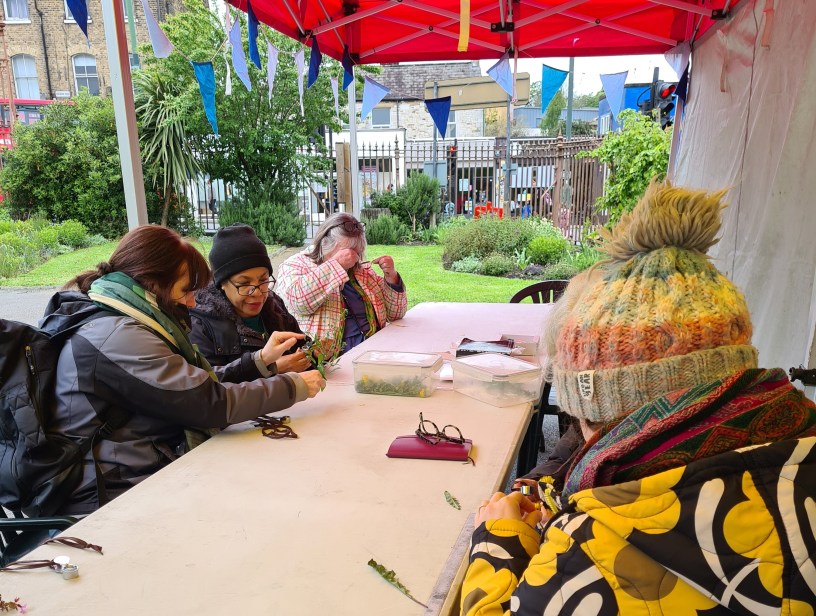
Committing to growing as a naturalist, and leading workshops and teaching others about nature (the photo is from a Beginners’ Guide to Wild Flower Identification workshop), has been invaluable in understanding how and why others care and learn about the natural world, which is something I regularly write about. & why wouldn’t every nature writer want to actively learn more about nature?
So, do think of nature writing as a part of your portfolio, and either plan to add to your income through something entirely unrelated, or consider what you could do which would add to the quality and/or subject matter of your nature writing. & don’t forget to check whether you’re eligible for any national or local grants when you’re getting started.
 Freelance Nature Writer
Four of your generous and pragmatic insights to life as a freelance nature writer arrived in my inbox this morning, Amanda. Thank you! The ‘portfolio approach’ to life as a freelance writer resonates particularly with me. Some years ago I moved from a salaried position to freelance work. Writing suits this lifestyle. Each element of the varied work I do supports the rest in different ways – financially, socially, learning and unusual insights amongst others. As a developing writer this approach also gives me time to pitch and publish without additional pressure. And, a big plus, when writing is going badly there is usually is another project lingering closeby to buoy flagging spirits. Unpaid work also fits into this ‘portfolio approach,’ feeding new ideas and ways of thinking into a brain that can so easily get cluttered and tired. Of course each person finds the way that works for them, but for me, for now, this is a good one!
LikeLike
Thanks for the feedback Sheila, & sorry for the inbox bombing :) You’re an inspiring example of the living the freelance life x
LikeLike