[Author’s note – I’d very much welcome readers’ comments on all or part of this blogpost. I expect I’ve missed key texts and viewpoints, and biased my references to the nature writing books and critiques in my own collection.]
Introduction
Nature writing is frequently described as a twenty-first century publishing phenomenon, but you could be forgiven for thinking there is a lack of clarity and consensus on the definition of nature writing. What is clear though, is that there is a long tradition of critiquing the concept and purpose of nature writing, and a resistance to being labelled “a nature writer”.
In an introduction to a collection titled An Anthology of Modern Nature Writing (1936), Henry Williamson, author of Tarka the Otter, wrote: “Consider the public and what is called “nature writing”. Most people leave such books alone, and suspect, with a tendency to derision, the idea of “nature loving”. It is bad, inefficient, amateurish, imitative, pretentious writing which is to blame… And good writers are always observant. Their intelligence lies in their powers of observation, of eyesight… the so-called great writers (true writers is a more precise term) are masters of detail…”
Richard Smyth, in his 2022 essay Nature Does Not Care quoted the ornithologist James Fisher as follows (in the Foreword to Gilbert White’s The Natural History of Selborne, 1947 edition). “Oh, the critics and reviewers, the weekly columnists, the nature correspondents, who find Nature ‘charming’; who find [Gilbert] White’s Selborne ‘charming’; who find the emotional, romantic outpourings of [Richard] Jefferies ‘charming’; who find the humourless introspection, the self-conscious pessimism, the nostalgic obscurantism of [W H] Hudson ‘charming’; and who lump them altogether in their charming paragraphs to charm those to whom the country is a plaything!”
Whether Fisher was justified in this view of readers of nature writing in the post-war years is not clear.
Is the nature writing genre as it emerged during the last three decades nothing more a diverse collection of works which in some way, however loosely, reference the natural world, and simply a publishers’ construct to market books? There’s little doubt that the marketing strategy has been successful. Witness those “nature writing” tables and shelves in almost every book shop, and the The Bookseller magazine’s view that “While vegetarian cookbooks and titles on climate change have seen sales drop in recent years, nature writing is enjoying its time in the sun”. Helen Macdonald’s H is for Hawk (2014), one of the all-time bestsellers usually described as nature writing, has recently been included in the list of texts for Edexcel’s GCSE English Literature syllabus.
The market for nature writing continues to grow on both sides of the Atlantic. In What “Nature Writing” Means Now: New Paradigm Shifts in America’s Oldest Writing Tradition (2024), author and nature writing lecturer Laura Pritchett wrote “Perhaps my biggest observation is simply that the [nature writing] field is exploding. The sheer number of titles makes my heart sing—after all, many of us consider planetary fate as a top priority, one needing our attention in novels, nonfiction, and poetry. And these books are making a difference in our politics and in our souls.” How does Pritchett know they’re making a difference, I wonder.
This blogpost combines an informal literature review of key books and critiques in nature writing over the last thirty years, with an overview of key debates in contemporary nature writing. My intention was to signpost key ideas and references for students and other readers with an interest in nature writing, and raise discussion topics which others could contribute to.
Evolution of nature writing – What distinguishes “New Nature Writing” from earlier nature writing, if anything?
A clever literary academic can reap rewards from applying a catchy label to a publishing phenomenon or genre, particularly if that label is picked up by mainstream media. Is the term coined in 2008, “New Nature Writing”, an example of that? Trends in literature are rarely linear but, to “have legs”, efforts must be made to distinguish works given the catchy label from earlier forms. And for NNW that involves some finessing.
We are first introduced to the expression NNW in Jason Cowley’s introduction to Granta: The New Nature Writing (2008). The criteria Cowley gave for selection were “from writers who approached their writing in heterodox and experimental ways” and who had “no need to travel to the other side of the world to understand more about themselves and their relations to the world they inhabit” and “aspire to see with a scientific eye and write with literary effect”. He described NNW as “voice driven, narratives told in the first-person, for the writer to be present in the story”, “an experiment in forms: the field report, the essay, the memoir, the travelogue” and writing which found “the extraordinary in the ordinary” and is “about new ways of seeing”. NNW had an imperative, in the quoted words of one of the authors, Lydia Peele, “to remake the connection [with nature]. I think our lives depend on it”
Cowley had a clear view on who wasn’t a New Nature Writer. “When I used to think of nature writing, or indeed the nature writer, I would picture a certain kind of man, and it would always be a man: bearded, badly dressed, ascetic misanthropic. He would often be alone on some blasted moor, with a notebook in one hand and binoculars in the other, seeking meaning and purpose through a larger communion with nature: a loner and an outcast.”
Railing against the gender bias of old nature writing in the introduction didn’t translate to diversity in the Granta selection. Of the 18 writers, all were white and only two were women.
Not everyone sees New Nature Writing clearly delineated. In his lecture William Condry – Naturalist & Nature Writer (2010), nature writer Jim Perrin (2010) argued there was nothing new in this form to suggest “a radical departure from the practice and preoccupations of its antecedents”….“One term that has been brandished around much over the last couple of years is that of “the New Nature Writing” – a self-serving formulation first coined, I think, by the publishing company Granta. Bearing in mind T.S. Eliot’s insights into the vitalizing role of historical precedent, we might be well advised to drop the misconception that the writing to which it refers is “new” in the sense of marking a radical departure from the practice and preoccupations of its antecedents. However much our culture may insist on novelty, we should always acknowledge the living influence of what has gone before…”
Other nature writers were also less than convinced of the merits of New Nature Writing, In Death of the naturalist: why is the “new nature writing” so tame? (2015), Mark Cocker wrote “One of the central concerns of the new literature is the idea of “re-enchantment”, a diffuse term that seems to mean whatever the author wishes. What it usually involves is clothing a landscape in fine writing, both the writer’s own and that of other historical figures – Emily Brontë, Edward Thomas and Nan Shepherd are good examples – so that the place is infused with fresh cultural meaning. (John Crace’s mischievous “Digested Read” for the Guardian of Macfarlane’s latest book, Landmarks, defines “Macfarlish” as “the process of praising other authors to make your own book better by association”.)
And Robert Macfarlane, frequently heralded as the doyen of New Nature Writing, wasn’t himself convinced of the usefulness of the label in Environment: New words on the wild (2013).
“Over the past 15 years, Britain has experienced a comparable surge with the blossoming of a literary form that has become known as ‘new nature writing’. The tone of this form, however, feels far from the roustabout activism of Abbey, or even the puckishness of Dillard. The genre is distinguished by its mix of memoir and lyricism, and specializes in delicacy of thought and precision of observation… Most distinctive, to my mind, is [New Nature Writing’s] tonal mix of the poetic and the scientific and analytical… Even this aspect of new nature writing, though, is hardly new. In the decade after the Second World War, US scientists Rachel Carson and Loren Eiseley, and pioneering conservationist Aldo Leopold — author of A Sand County Almanac (1949) — became famous for the intimate tone and ethical commitment of their essays. They were “imaginative naturalists”, to borrow the subtitle of Eiseley’s million-selling The Immense Journey (1957). Their appeal lay in their fusion of the latest research with first-person narrative.”
Jos Smith, in The New Nature Writing. Rethinking the Literature of Place (2017) was committed to trying to establish the differences between New and Old Nature Writing. He wrote “In the last decade there has been a proliferation of landscape writing in Britain and Ireland, often referred to as ‘The New Nature Writing’. Rooted in the work of an older generation of environment-focused authors and activists, this new form is both stylistically innovative and mindful of ecology and conservation practice.”
Joe Moran in A Cultural History of the New Nature Writing (2020) pointed out the challenges of the label. “The genre label [New Nature Writing], as several of those thus labelled have protested, is somewhat unsatisfactory. Their writings tend to be thematically wide-ranging and stylistically digressive, combining personal reflection with natural history, cultural history, psychogeography, travel and topographical writing, folklore and prose poetry, which makes them correspondingly difficult to categorise. Many of these writers are uneasy about identifying themselves as a movement (although some are or were friends, collaborators and near neighbours) and, given the ambition and range of their work, they generally prefer to be known as writers rather than nature writers.”
Discussion topic: Is the label “New Nature Writing” specific and useful, or are texts labelled NNW simply an evolution of ongoing traditions in the genre? What, if any, are the parallel issues in other non-fiction genres?
Nature versus nature writer – Is there too much “I” in contemporary nature writing?
The presence of the nature writer in nature writing has a long tradition. In Plashy Fens – The Limitations Of Nature Writing (2017), Richard Smyth wrote “More writers in this century take their cues from J. A. Baker than from Gilbert White. Baker was the enigmatic author of The Peregrine, a study of falcons in the Essex saltings published in 1967. It is a work that’s notable for being minimalist in content – peregrines come, peregrines go, peregrines come again – but written, for the most part, in the most vertiginous of high styles. In his foreword to a re-edition of The Peregrine in 2005, Robert Macfarlane offered an explanation for this contrast. “What Baker understood,” he wrote, “was that in order to keep the reader reading through the same cycle of events, he had to forge a new language of description.” Nature is interesting because Baker is interesting.”
In The Perfumier and the Stinkhorn (2011, pp. 4-5), Richard Mabey defended the nature writer’s voice in nature writing, insisting that our feelings “can precede or follow the moment of exact observation without necessarily contaminating its truthfulness”.
Jonathan Franzen argued in The Problem of Nature Writing (2023) that for nature writing to succeed in getting people to care about preserving the world, it can’t be only about nature. “Narrative nature writing, at its most effective, places a person (often the author, writing in first person) in some kind of unresolved relationship with the natural world, provides the character with unanswered questions or an unattained goal, and then deploys universally shared emotions—hope, anger, longing, frustration, embarrassment, disappointment—to engage a reader in the journey. If the writing succeeds, it does so indirectly. We can’t make a reader care about nature. All we can do is tell strong stories of people who do care, and hope that the caring is contagious.”
In Nature Does Not Care (2022), Richard Smyth highlighted the challenge of balancing nature and writer.“Like H Is for Hawk and Amy Liptrot’s memoir The Outrun (2015), [Robert Macfarlane’s] work has contributed to the construction of British nature as an emotional space, and of nature writing as a form that is more about the writer than about the nature.”
As well as books in which pages are strewn with “I”, the parent-child relationships are explored in the context of nature watching. Examples include Miriam Darlington’s Owl Sense (2018), Simon Barnes’ On the Marsh (2019) and Patrick Barkham’s Wild Child (2020).
The most extreme example of focus on the writer in contemporary nature writing is a focus on the therapeutic benefits of time spent in nature or what has been referred to, somewhat unkindly, as the “nature fixed me” trope. Examples include Richard Mabey’s Nature Cure (2005), Helen Macdonalds’s H if for Hawk (2014), Amy Liptrot’s The Outrun (2015), Joe Harkness’s Bird Therapy (2019) and Isabel Hardman’s The Natural Health Service (2020).
Discussion topic: Has there been too much “I” and/or nature as therapy in nature writing, and, if so, how might this affect the audience’s view of the world? What, if any, are the parallel issues in other non-fiction genres?
Voices and audiences – Who do we want to tell us about nature, and who is reading nature writing?
Contemporary nature writers seem to emerge mainly from one of two backgrounds: either a natural history/science/conservation one (like Richard Mabey, Mark Cocker and Amy-Jane Beer) or a literary/journalistic one (like Robert Macfarlane, Helen Macdonald and Michael Malay). Which of these groups a nature writer primarily belongs to can affects their credibility in telling us about nature, and the audiences their writing attracts.
Despite the diversity and inclusion efforts of conservation organisations like the RSPB, the Wildlife Trusts and others, the fields of amateur natural history (in particular birdwatching, despite increasing numbers of women birders and birders of colour) and conservation are still dominated by white men. So, while it’s unacceptable, it’s perhaps not surprising that white male authors are still over-represented in nature writing. Exceptions in British nature writing include naturalists and environmentalists Amy-Jane Beer (The Flow, 2022) and Scottish writer of colour, Amanda Thomson (Belonging, 2022).
The literary/journalistic route into nature writing appears to have introduced more diverse voices including nature writers like Jini Reddy (Wanderland, 2020), Anita Sethi (I Belong Here, 2021), Elizabeth-Jane Burnett (Twelve Words for Moss, 2023) and Michael Malay (Late Light, 2023).
Efforts to revisit the history of nature writing and rebalance the contribution of women writers have highlighted the nature writing of English poets Elizabeth Barrett Browning and Christina Rossetti as well as US writers and naturalists Olive Thorne Miller (Birds’ Ways,1885 and In Nesting Time,1888), Graceanna Lewis (Natural History of Birds,1868), Mary Austin (The Land of Little Rain, 1903) and Neltje Blanchan (Bird Neighbors,1897). Scottish author and naturalist Eliza Brightwen (1830-1906) has been described as one of the most popular naturalists of her day, but her memoir The Life and Thoughts of a Naturalist is out of print.
Henry Williamson’s anthology An Anthology of Modern Nature Writing (1936) is notable in that all the writers are male. Were women not writing in about nature in Britain at that time? We do know that Nan Shepherd wrote The Living Mountain during WW2 (shortly after the publication of Williamson’s anthology) but then it wasn’t published until 1977.
Debates on the narrowness of voices in nature writing were amplified with Scottish poet and nature writer Kathleen Jamie’s review of Robert Macfarlane’s book, The Wild Places, in A Lone Enraptured Male (2008) in which she questions the concept of wilderness in the British Isles and a colonialist attitude in nature writing. While considering Macfarlane a “delightful literary company, polite, earnest, erudite and wide-ranging in his interests”, she admits to “a huge and unpleasant prejudice… when a bright, healthy and highly educated young man jumps on the sleeper train and heads this way, with the declared intention of seeking ‘wild places’, my first reaction is to groan. It brings out in me a horrible mix of class, gender and ethnic tension. What’s that coming over the hill? A white, middle-class Englishman! A Lone Enraptured Male! From Cambridge! Here to boldly go, ‘discovering’, then quelling our harsh and lovely and sometimes difficult land with his civilised lyrical words.”
Whether Jamie’s perspective was fair, or not, as well as continuing to be highly successful writer, Robert Macfarlane resisted the temptation to respond in public.
While it was perhaps ironic that it was Stephen Moss, a white, male, Oxbridge-educated nature writer, who was commissioned to write about the lack of diversity in nature writing, his thoughtful article Gender, race, climate and the New Nature Writing (2019) for The Guardian raises important issues. Moss notes that “In the last decade many books with the greatest impact and highest sales have been written by women. They include H is for Hawk, a moving memoir of grief by Helen Macdonald, and The Outrun, Amy Liptrot’s powerful account of how nature’s redemptive powers helped her overcome her substance addiction. Both titles were not just critically successful, but commercial hits too.” even if others have taken issue with these books being described as nature writing.
Moss points out that “…even if the gender balance is improving, most nature writers still come from a close-knit group who, with a few notable exceptions, are mainly middle-class, middle-aged and white.”
The challenges for naturalists of colour, and writers of colour who write about nature, was explored by Samantha Walton in Social Difference and Nature (2018). Walton argues that “Black and Asian British nature writing is very rarely considered in New Nature Writing canons, though the work of Ingrid Pollard and V.S. Naipaul (particularly his The Enigma of Arrival, 1987) overlaps in significant ways with new nature writing: in its reflection on the poetics of place and the politics of presence and its combination of lyric and critical modes.”
In an interview in the Guardian (2019), Scottish nature writer and poet Kathleen Jamie returned to her concerns about diverse voices in nature writing. “I hate to say it, but [nature writing] has been colonised – by middle-class white men. I’m interested in how that’s happened.” Interviewer Patrick Barkham wrote: “Kathleen Jamie recently spent “valuable minutes” of her life totting up all the books and authors who have been shortlisted for the prestigious Wainwright prize for British nature and travel writing. The tally is 26 books by men and 14 by women. For winners, the ratio is five men to one woman.”
In Where are the UK’s nature writers of colour? (2020), Sophie Yeo highlighted some positive developments in diversity of voices. “To exclude writers of colour from the genre of ‘nature writing’ is a literary as well as a moral failing. Literature is poorer when participation is limited.” Yeo went on to highlight positive developments: “In 2019, Canongate launched the Nan Shepherd Prize for underrepresented voices in nature writing, and, in 2018, The Willowherb Review was launched, focusing explicitly on publishing nature writers of colour.”
In Whose Voices, Which Land? (2022), neurodivergent writer Grace Quantock explored the contributions of marginalised writers to 21st century nature writing. She wrote “I realised the books I read didn’t reflect the world I lived in. Nor that of my multilingual, mixed race, disabled, neurodivergent, Muslim, immigrant family. As a disabled white woman, I hadn’t noticed whiteness, non-disabled, neurotypical, middle class, first-language-English skewing in nature writing and in Western literature as a whole. It was the norm, the default.”
Other neurodivergent nature writers include Dara McAnulty (Diary of a Young Naturalist, 2020) who won the Wainwright prize in 2020. Physically disabled nature writers are currently under-represented in published book-length works.
In addition to the under-representation of women, writers of colour and disabled writers, the LGBTQ+ community appear to be under-represented in nature writing, with the few exceptions including Natasha Carthew (Undercurrent: A Cornish Memoir of Poverty, Nature and Resilience, 2023) and US birdwatcher Christian Cooper’s Better Living Through Birding (2023).
Nature writers from working-class backgrounds can be hard to identify but are also likely to be under-represented in nature writing as they are elsewhere in literature, and further research would be valuable here, too. Nicola Chester (On Gallows Down, 2023), Amanda Thomson (Belonging, 2022), Anita Sethi (I Belong Here, 2021) and Natasha Carthew, founder of the Working Class Nature Writing Prize are notable examples of nature writers who identify as working class.Who is reading contemporary nature writing? Is the audience primarily, or even only, metropolitan, & does that matter?
In The naming of the shrew: language, landscape and the new nature writing (2015), Philip Hoare suggested readers were urban/suburban rather than rural. “As we separate ourselves from ourselves, we seek a new association in nature and the land. Most of us live in suburbia, a nowhere place, and so we send surrogate explorers – writers, artists, film-makers – to seek a reconnection that might never have been there in the first place.”
In Death of the naturalist: why is the “new nature writing” so tame? (2015), Mark Cocker wrote that writer and mountaineer Jim Perrin saw nature writing for an urban audience: “…new nature writing is quintessentially an urban literature with a primarily metropolitan audience. [Perrin] suggests that for both author and reader, engagement with nature is an act of remembrance rather than a daily, lived experience. Given that most Britons now dwell in cities, one could argue that it is therefore a perfect literature for our times.”
Discussion topic: Could and should all practising nature writers contribute to increasing the diversity of voices and audiences? What, if any, are the parallel issues in other non-fiction genres?
Ethical imperatives. Must nature writing (always) have them?
Is it reasonable to expect nature writers to (always) be engaging and educating readers on issues, like the climate crisis, the biodiversity crisis, and/or land ownership and management, for example?
In Environment: New words on the wild (2013) Robert Macfarlane was not convinced. “There are good reasons not to exaggerate the possible consequences of nature writing. One is that it often preaches to the converted: the people it reaches tend to be those with the most developed environmental consciences. “Sceptical readers,” as the American farmer and writer Verlyn Klinkenborg observed, “seldom pick up this kind of writing, or submit to its evidence.” Another reason is that nature writing can often feel too pious and gentle in its urgings — the green equivalent of attending Sunday school.”.
Macfarlane goes on to argue of the importance of positive messages writing “…our behaviour is more likely to be changed by promise than by menace. We will not save what we do not love.”
Commenting on Michael McCarthy’s The Moth Storm (2015) in Death of the naturalist: why is the “new nature writing” so tame? (2015), Mark Cocker commented on the achieving a balance between hard-hitting messages and optimism. “Does this mean that all nature books have to be filled with the grief and pain of loss? Of course not. But they have to navigate – as McCarthy endeavours to do – between joy and anxiety. Nature writers must ponder and engage with these troubling realities. Otherwise, we are just fiddling while the agrochemicals burn…”
In Gender, race, climate and the New Nature Writing (2019), Stephen Moss discussed the dispute between Mark Cocker and Robert Macfarlane on the purpose of nature writing in the New Statesman and concluded: “…we all need to remember one thing. That in an increasingly polarised and intolerant world, the real fight is not among ourselves, but against those who, in pursuit of privilege, wealth and power, seek to destroy everything we hold so dear.
Whether reading nature writing helps people reconnect with nature so that they take a more active role in protecting the natural world, or is a displacement activity which makes them feel better about the state of the natural world, is debated.
In Death of the naturalist: why is the “new nature writing” so tame? (2015), Mark Cocker was concerned. “The real danger is that nature writing becomes a literature of consolation that distracts us from the truth of our fallen countryside, or – just as bad – that it becomes a space for us to talk to ourselves about ourselves, with nature relegated to the background as an attractive green wash. The project of re-enchantment might restore to us a canon of lost writings about the eeriness and mystery of our landscape. Yet, as Emerson warned in his essay “Nature”, what worth is there in words that have no real soil at their roots?”
Other critiques consider the risks of asking the reader to always seek meaning in nature.
In Nature writing is booming – but must a walk in the woods always be meaningful? (2019), Zoe Gilbert considered the separation between writer and audience. “Nature writing offers us vicarious enchantment, for how many of us really have the time, the money and the tenacity to make regular, lengthy forays into the wild”.
Gilbert pushed against the idea that time in nature should always be enchanting. “I suspect my resistance in the face of nature writing stems from stubbornness: against the implication that if only I connected properly with nature, I would be elevated somehow… The more we idolise extreme or unusual experiences of the natural world, the less inclined we will be to bother looking for meaning in our ordinary lives, on our own street, in our local patch of park.”
In Things As They Are (2020), Hughie Rogers-Coltman took issue with the idea that nature writing helps us reconnect with nature. “One word appears again and again in these discussions of the genre: ‘reconnection’. It’s an interesting word to use. Why the ‘re-’? It implies that in connecting with nature we are returning to something – that there is a state of nature where we belong by birth, and that accessing that state is a process of regression, of stripping back the cultural norms that have been put upon us.”
Discussion topic: Does nature writing have to have an ethical purpose?
Authenticity and expertise – How important is it for nature writers to be naturalists?
Not all nature writers have a natural history background of a nature writer, but any writer can demonstrate an interest in knowing more about nature. Does it matter if a writer knows about and can name the things they see as well as being to write lyrically about them?
In Death of the naturalist: why is the “new nature writing” so tame? (2015), Mark Cocker argued that Richard Mabey’s naturalist credentials were fundamental in his writing “He is, after all, a lifelong practising botanist.”
In a 2015 interview with Little Toller, US author and nature writing teacher John Elder discusses authenticity as the goal for nature writers. “My sense of the word ‘authentic’ has been influenced by an essay written by Barry Lopez, called ‘Landscape and Narrative’. He talks in it about the distinction between authentic and inauthentic stories, taking as his example a group of native people in Alaska who describe a situation involving a wolverine. Lopez told their story to another group of native people (who were unaware of the first group) and they recognised that in the light of their own experience of wolverines it could definitely have happened – they recognised it as authentic.”
In Plashy Fens – The Limitations Of Nature Writing (2017), Richard Smyth argued for the importance of the voices of nature “field-workers” and appeared to suggest that natural history knowledge was undervalued compared with literary prowess: “It’s a reflex in many readers and reviewers to read great nature writing and cry “poetry!”
In Against Nature Writing (2021), Charles Foster reluctantly accepted the importance of specificity in nature writing: “The poets—the cruel, correct bloody poets—tell me that all the real wonder is in the shimmering particularity: that if I generalize, abstract, or philosophize, I’ve lost the plot, missed the point, and I am wasting my life.” and suggested the solution to be to look at and listen carefully to nature: “We can show deference to the natural world by imitating it in our stammering cadences: by listening carefully to its accents and striving to reproduce them in onomatopoeia.”
In his book Birds Art Life (2017), Kyo Maclear argues for a balance – that the best writing on nature “capture[s] the sweet spot between poetic not-knowing and scientific knowing”.
In Nature does not care (2022), arguing for the importance of knowing the names of things, Richard Smyth expressed his frustration with Jini Reddy (Wanderland, 2020) quoting her debating: “…which was worse, ‘needing to know the name of every beautiful flower you come across or needing to photograph it’” and appeared to be frustrated by Reddy’s several references to “a bird of prey” without her appearing to have any interest in what the bird might have been.
Smyth held up Jon Dunn’s book The Glitter in the Green (2021) as exemplary in its combination of careful observation with elegant writing: “It’s the sort of well-informed bio-realism that one would expect to see from anyone who has lived observantly, thoughtfully, among wild things. Every writer on nature comes to their own accommodation with the hard facts of wild life [sic]. We needn’t all look at them too closely, or for too long – but, if we don’t look at them at all, I’m not sure what our writing is for. Where we connect with nature, we make a complicated music. We lose a good deal, I think, if we miss or mute the minor chords.”
Discussion topic: Is nature knowledge essential in nature writing, or is nature appreciation enough? What, if any, are the parallel issues in other non-fiction genres?
Form, structure and language – What are the commonalities in contemporary nature writing.
The tradition of nature writing has embraced a diversity of forms and structures, from the “letters” of Gilbert White’s A Natural History of Selborne (1788), through the narrative fiction of Henry Williamson’s Tarka the Otter (1927), to the quest in J.A. Baker’s The Peregrine (1967). In the last thirty years, some structures have dominated.
Quest narratives persist in nature writing as they do elsewhre in creative non-fiction and fiction. In addition to the troupes of writers hunting for Goshawks and orchids, Miriam Darlington hunts for wild otters in Otter Country (2012) and Bob Gilbert seeks Black Poplars in his local parish in Ghost Trees: Nature and People in a London Parish (2018). Mike Dilger relates his search for wild plants in One Thousand Shades of Green (2023), and selected for the Wainwright Prize shortlist, Alastair Humphrey spends a year exploring the Ordnance Survey map around his home, one square per week, in Local: A Search for Nearby Nature and Wildness (2024).
Lists, elaborated, are also a popular form, with examples including Katherine Rundell’s The Golden Mole (2022), Stephen Moss’ Ten Birds That Changed the World.
Has the contemporary nature writing structure and form become too predictable? The contemporary nature writing cliché is narrative prose written in the first person in which the writer pursues some kind of quest, and, in the process addresses some kind of emotional issue.
Some nature writers, particularly those with a background in poetry, have started to experiment with forms and structures. Kathleen Jamie’s Findings (2005), Elizabeth-Jane Burnett’s Twelve Words for Moss (2023), and Amy-Jane Beer’s Wainwright prize winning book The Flow (2022 ) are all examples of writers experimenting with form.
Discussion topic: Are the structures, forms and language in contemporary nature writing too predictable? Which writers are pushing the boundaries and how are they doing that?
Subject matter – Are there enough books now about Goshawks?
If a reader walks into a bookshop today and chooses a book from the section labelled “nature writing”, is it reasonable to assume that the subject of the book will largely be nature? And how is/should “nature” be defined in that context?
In Death of the naturalist: why is the “new nature writing” so tame? (2015) author Mark Cocker took issue with Helen Macdonald’s H is for Hawk as legitimately nature writing.
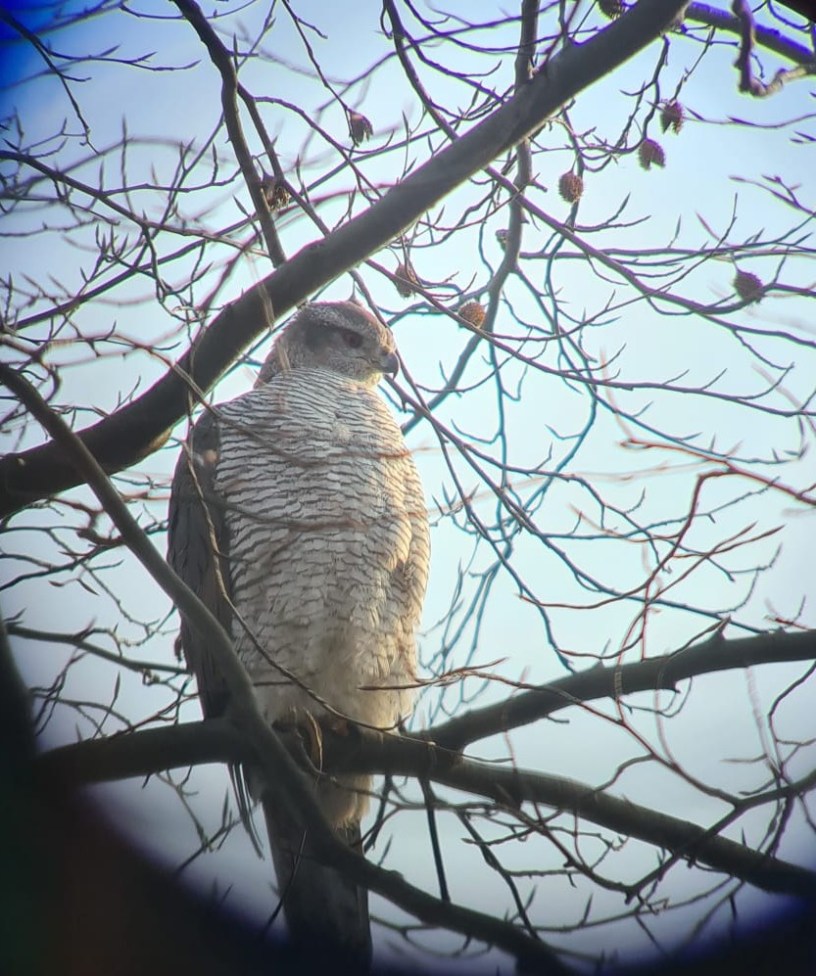
“The book’s profound impact is not in any doubt but a legitimate question to pose about H Is for Hawk is its status as a nature book. The motif of a raptor as a symbol of grief and of the author’s struggle with depression is indisputably powerful. Macdonald’s evocation of her bird’s savage habits also provides the book’s aura of raw otherness but it is ultimately not a wild bird. Yet there are wild goshawks in Britain and these barely appear in the text. You would understand why if you have ever tried to look for this extraordinary bird. Wild goshawks are among Britain’s most elusive and unpredictable large predators. I go looking routinely and count a sighting on one in ten visits a pretty good return. Goshawk watching is a frustrating business but the birds’ self-willed indifference to our intentions is surely almost a defining characteristic of nature.”
Other books which are usually bracketed in the nature writing genre despite their primary focus on pets or captive animals include Esther Woolfson’s Corvus: A Life with Birds (2008) about her relationship with rescue birds and Elisabeth Tova Bailey’s The Sound of a Wild Snail Eating (2010) about a captive snail.
In plant writing, arguably the equivalent of writing about pets and captive animals is writing about gardening. Notable examples which have been described as nature writing are Alice Vincent’s two books, Rootbound (year) and Why Women Grow: Stories of Soil, Sisterhood and Survival (2023). Shorlisted for the Wainwright prize, Olivia Laing’s The Garden Against Time (2024) is a memoir of restoring a walled garden in Suffolk in the context of the history of gardening.
Books about landscape, “the countryside” and its history are often included in the nature writing genre. Robert Macfarlane is probably the best-known writer in this sub-genre, with books like The Wild Places (2007), The Old Ways: A Journey on Foot (2012) and Wainwright prize-winning Underland (2019).
Amy Liptrot’s hugely successful book The Outrun (2016) which is frequently included in nature writing lists focuses primarily on her experience of recovering from substance abuse in the Orkneys, and Dorthe Nors’ A Line in the World (2022) was shortlisted for the 2023 Wainwright Nature Writing Prize despite being predominantly about the author’s emotional relationship with the Danish coast and barely mentions any aspects of nature, other than a few passing birds.
The 2024 Wainwright shortlist included three examples of the “landscape and countryside sub-genre”. In Rebecca Smith’s Rural: The Lives of the Working Class Countryside (2023), the focus is on people rather than nature, and in Uprooting: From the Caribbean to the Countryside – Finding Home in an English Country Garden (2023), Marchelle Farrell writes about her own efforts to connect with her new home. In Kat Hill’s Bothy: In Search of Simple Shelter (2024), she explores the history of bothies and the meaning of wilderness and escape.
For nature writing books which do clearly focus on the natural world, a skew in subject matter is evident. There appears to be a bias towards books about animals, particularly birds and mammals.
Usually touted as the earliest example of British nature writing, Gilbert White’s The Natural History of Selborne (1788) is mostly about birds. White had strong views about the study of plants, writing “The standing objection to botany has always been, that it is a pursuit that amuses the fancy and exercises the memory, without improving the mind or advancing any real knowledge…” (page 208), which may explain why he devoted so little text to parish plants.
There are many contemporary nature writers who write wholly or partly about birds and/or birdwatchers, but writers of note include Mark Cocker (Crow Country, 2007), Lev Parikian (Why do Birds Suddenly Disappear, 2018) and prolific nature writer Stephen Moss.
Birds of prey are particularly well covered in nature writing, with J.A. Baker’s The Peregrine (1967), and, in addition to H is for Hawk, T. H. White’s The Goshawk (1951) Conor Mark Jameson’s Looking for the Goshawk (2013) and James Aldred’s Goshawk Summer (2021) which won the 2022 Wainwright Prize. The prevalence of books about Goshawks seems particularly ironic given few readers in the British Isles are likely to have the good fortune to see this large but elusive bird. Or perhaps that is why they are successful.
Nature writing books rarely focus on invertebrates, and, when they do, primarily on butterflies and moths or bees. Examples include Patrick Barkham’s The Butterfly Isles (2010), Michael McCarthy’s The Moth Snowstorm (2015) and Brigit Strawbridge’s Dancing with Bees (2019).
The narrow view of animals in nature writing may be changing. Winner of the 2024 Wainwright prize, Michael Malay takes a broader look at the animal kingdom in Late Light: The Secret Wonders of a Disappearing World (2023), exploring the English countryside through four of its creatures – eels, moths, freshwater mussels and crickets.
A very small proportion of nature writing books are about plants. US botanists Elisabeth Schussler and James Wandersee, coined the term ‘plant blindness’ as “the inability to see or notice the plants in one’s own environment”, which perhaps applies to choice of subjects for nature writing too. While they’re not narrative nature writing, in the 140 books of the classic New Naturalist series, 13 are focused mainly on plants compared with 48 on animals. Of the New Naturalist monographs, only one is about a plant species, Lords and Ladies, compared with 19 on animal species. Not even the English Oak makes the list. In the first five years of the prestigious Wainwright Prize Nature Writing longlist, the small number of books about wild plants focused mostly on trees and then a further few on woodlands or cultivated plants and gardening.
And wider than the Wainwright prize, many of the plant nature writing books published in the last thirty years are about trees too. Notable are Roger Deakin’s mix of memoir, natural history and history in Wildwood: A Journey through Trees (2007) and Bob Gilbert’s Ghost Trees: Nature and People in a London Parish (2018). Beyond trees, orchids have also had more than their fair share of shelf space, with Leif Bersweden’s The Orchid Hunter (2017) jostling with Jon Dunn’s Orchid Summer (2018) and, in part, Peter Marren’s Chasing the Ghost (2018).
A refreshingly wider view of plants is seen in nature writing by Richard Mabey, for example Weeds (2010), and Mike Dilger’s One Thousand Shades of Green (2023). In her Wainwright Prize shortlisted book, Dispersals: On Plants, Borders and Belonging (2024), Jessica J. Lee sets out to explore the entanglements of the plant and human worlds through the lens of migration.
It isn’t only the subjects of nature writing which can seem narrow. Where the author chooses to look for nature can seem that way too. The search for wilderness has a long tradition in nature writing on both sides of the Atlantic, from Henri David Thoreau’s On Walden Pond (1854) to Robert Macfarlane’s Wild Places (2007).
in Environment: New words on the wild (2013), Macfarlane doubled down on the importance of wilderness in nature writing: “North America has always been a happier habitat for nature writing than Britain, perhaps because the vast and various geography of the continent — from southern canyon lands to northern polar tundra — has provided limitless inspiration”.
Have we passed “peak wilderness” in nature writing? Since the publication of Richard Mabey’s The Unofficial Countryside (1973), an increasing number of nature writers have explored the nature in less obvious places like Rob Cowen’s Edgelands (2015) and Stephen Moss’ The Accidental Countryside (2020). In recent years, a few nature writers have focused entirely on urban nature or rather urban animals, with Esther Woolfson’s Field Notes from a Hidden City (2013) and Florence Wilkinson’s Wild City (2022) being notable examples. Melissa Harrison’s 2013 book Clay has been described as a novel for urban nature-lovers.
Discussion topic: Do the subject matter boundaries and/or subject biases in nature writing matter? What, if any, are the parallel issues in other non-fiction genres?
Conclusions
In Things As They Are (2020), Hughie Rogers-Coltman marvels that “Almost as numerous as books in the new nature writing are think pieces (the Guardian has published dozens) pondering its newfound popularity.”
Nature writing is wide and messy genre within narrative non-fiction, but, given it is a publishing phenomenon, and the potential it has to influence its readers views about the natural world, the plethora of think pieces about nature writing seem entirely justified, but then, as a lecturer of nature writing, perhaps I would say that.
While writers who were originally tagged as part of a New Nature Writing genre were predominantly white men, nature writing is slowly becoming more diverse. How much readers want of the writer in the nature writing appears to be on a spectrum, with some preferring more nature than nature writer, and vice versa.
How nature writers should and do respond to the climate and biodiversity crises will no doubt continue to be debated. A wider audience is likely to baulk at being presented repeatedly with doom-laden texts without any solutions, as it is with authors who aren’t able to steer a careful line between information giving and communicating awe and enthusiasm while retaining authenticity. And it’s time for the publishing world to seek refreshing new approaches to the structure and form of creative nature writing as well as a diversity of subjects.
Many of the key debates elaborated here have parallels in other genres of creative and, in particular, narrative non-fiction. Evolving genres, diversity of voices, the voice of the author, the messaging, authenticity, and creativity in form and subjects are important in all non-ficiton.
But, honestly, we really have had enough books about Goshawks.
 Freelance Nature Writer
wonderful essay – very thought-provoking and insightful – concurring a lot with the themes discussed!
LikeLiked by 1 person
How kind.
LikeLike
How kind.
LikeLike
Thank you for this wonderful summary of the debates and critiques of “new nature-writing”. As someone who came in through the side door, I found it very useful to see these arguments put together, with thoughtful questions for discussion. I am familiar with most of the names and genres, but there are some that I have missed and am grateful to see this put together.
LikeLiked by 1 person