
Inspired by preparing for a seminar on New Directions in Nature Writing, I sat down and revelled in reading all six books in this year’s shortlist for the Wainwright Prize for Nature-writing. And this is how I got on…
Twelve Words for Moss – Elizabeth-Jane Burnett – Allen Lane
Initially I admit to being a little put off by the cover design and the reference to poetry – I always feel that I don’t really get poetry so in a somewhat cowardly way tend to avoid it – but glad I persevered. On the face of it, this is a book about mosses and the places Elizabeth-Jane found them, but it’s also about learning, naming, language and grief. Narrative prose is interwoven with prose-poetry and poetry, much of which has a rather dream-like and, in some places, surreal feel to it. This is a book which celebrates the intrinsic value of a much overlooked group of plants, which, as the author becomes familiar with them, she starts to see as her friends. It was full of surprises, and I loved that.


Ten Birds that Changed the World – Stephen Moss – Guardian Faber*
This is a book which does what it says on the tin, or rather book jacket, and does it brilliantly. Through the stories of 10 birds or groups of birds Stephen explores our our attitudes to the wider natural world. I’m a huge fan of Stephen’s writing and this is a great addition to his ever-expanding portfolio. The author makes only brief appearances unlike so many examples of contemporary nature writing – it’s simply fascinating natural history written accessibly and thoroughly researched. There are thought-provoking ideas and a good dose of wisdom, for example the fundamental point that we shouldn’t assume animals are “on our side”. [Full disclosure – Stephen is a good friend and colleague.]
Belonging – Amanda Thomson – Canongate
Amanda explores the Scottish landscape and nature of northern Scotland and near her childhood home. Beneath the surface, it’s about the importance of naming, language and identity and is described on cover as a “love letter to nature”. The author is a writer, naturalist and visual artist of colour, who grew up in a working class Scottish mining family. The book has an interesting and complex structure – combining first person nature writing, lists of Scottish words for the natural world, science and poetic sections, as well as beautiful illustrations by the author. She makes the case for finding joy in nature and for seeing species as of intrinsic value rather than what they can do for us. We’re shown the precariousness of some ecosystems in the British Isles but how we can contribute to effecting change. A wonderful book, which I’d have also awarded Highly Commended.

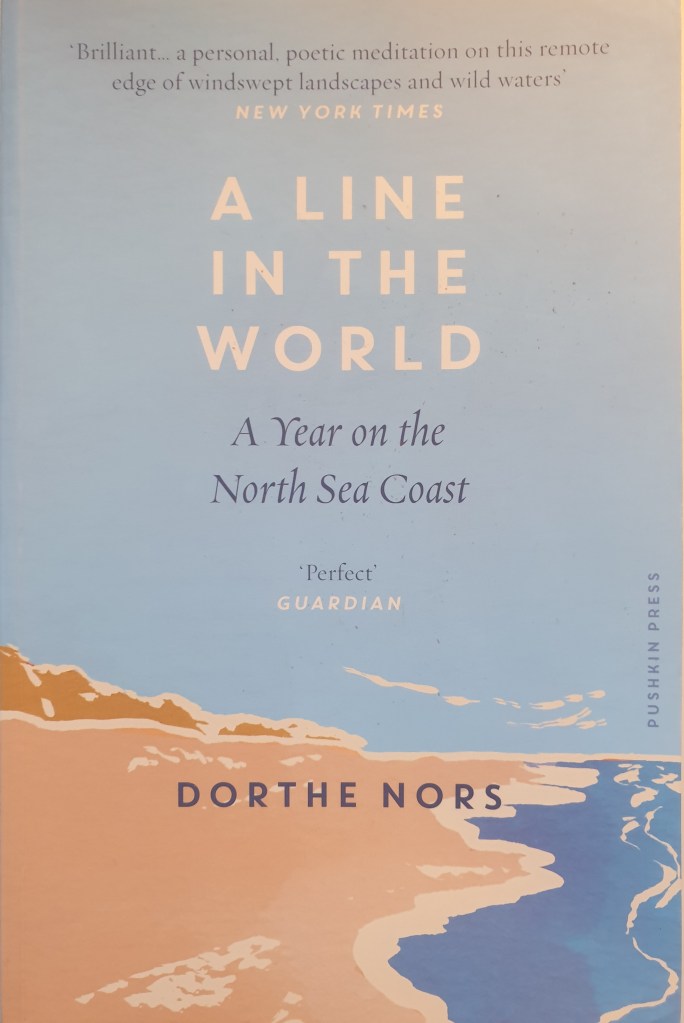
A Line in the World – Dorthe Nors – Pushkin Press
This book stands out in the shortlist for being both about the landscape of the west coast of Denmark (plus a bit of Germany and the Netherlands), rather than the British Isles, and making few references to the natural world. It seems to be primarily about the therapeutic nature of the landscape – with passing references to recovering from an unhappy relationship and the loss of her childhood home – similar to the way others have written about therapeutic nature. She’s a Danish fiction writer, and refers to “two of my passions, literature and paths”. It is beautifully written, in what I think of as a literary fiction writing style, and on occasions I forgot it was non-fiction; she herself refers to story-telling and seems almost to question the authenticity of her writing. She writes about the big picture – the landscape – rather than the natural details – so it seems in some ways a controversial inclusion in the short list for a nature-writing prize. The writing was lovely – I enjoyed reading it – but I was surprised this met the Wainwright criteria, which presumably I’ve misunderstood
The Golden Mole – Katherine Rundell – Faber & Faber – Highly Commended
This is a relatively short book about 21 endangered animals with snippets of biology, some ‘wow’ facts – for example that tuna are the only warm-blooded fish – and references to them in different cultures. The representation of animals in literature is central – she is a literature academic – but she weaves in science too. But is it really about natural wonders and the nature of our wondering? Or how human activities are – the section on how big business speculates on extinction is particularly shocking – driving these animals to extinction? It has a feeling of a children’s book in the wide-eyed way she writes & she does write for children too. It’s funny in places – there’s a serious message but it’s not delivered with doom and gloom. I loved it, but wasn’t convinced it was nature writing as such.


Amy-Jane Beer – The Flow – Bloomsbury – The Winner
Amy sets out to explore waterways and wetland wildlife across the British Isles as a way of coming to terms with the tragic loss of a kayaking friend ten years earlier. I loved the way Amy’s writing meanders, flows and jinks like the rivers she’s writing about and the way she weaves in mythology, landscape and people while treading a thoughtful and kind path in exploring some trickier issues. The blurb on the cover suggests that there might be more on the personal tragedy, but in practice this is touched upon delicately and briefly which seems appropriate. What we really learn about is the nature, the healing power of water and the author’s relationship with it. An extraordinary, beautifully written, personal and complex book – and a worthy winner of the prize.
What do other readers think?
 Freelance Nature Writer
Hi Amanda
Good to hear from you. Are you ok? Are you doing any more workshops?
With kind regards
Geraldine
LikeLike
& you Geraldine. No workshops planned at the mo, as busy with Uni teaching… but, if and when, I’ll advertise on this site.
LikeLike
They sound like books I’d love to read. I absolutely love mosses and lichens. They’re such a diverse group of plants that delight sight and touch. I will definitely order the Amanda Thomson book as identity of place means a lot to me. Thank you for your recommendations.
LikeLike
I hope you’ll enjoy Belonging as much as I did…
LikeLiked by 1 person
As soon as I finish the book I’m currently reading, I’m going to order it. I’ll let you know how I get on. 🙂
LikeLike